
June 8, 2026
If you’ve been wondering what actually happens during a dental implant procedure, you’re not alone. Many Beaverton patients feel nervous simply because they don’t know what to expect. Your dental implant procedure explained step-by-step is exactly what this guide offers — from your very first consultation all the way through final healing. At Pacific Northwest Dental, Dr. Bradley walks every patient through this process with clarity and care. Understanding each phase helps reduce anxiety and builds real confidence in your decision.
Step One: Your Consultation and Treatment Planning in Beaverton
Every successful implant starts with a thorough consultation. Dr. Bradley will review your dental and medical history during this first visit. He’ll take digital X-rays and 3D scans to evaluate your jawbone density and gum health. This information shapes your entire personalized treatment plan.
Not everyone qualifies for implants right away. Some patients need a bone graft or gum treatment before moving forward. Dr. Bradley explains every finding clearly so you understand your options. You’ll leave this appointment knowing exactly what your treatment timeline looks like.
During this stage, Dr. Bradley also discusses sedation options. Many patients in Beaverton choose sedation to feel more comfortable throughout the process. Knowing your comfort preferences ahead of time makes the entire experience smoother. This is also a great time to ask any questions you’ve been holding onto.
Step Two: Implant Placement — What Happens During the Procedure
On the day of your implant surgery, your mouth will be thoroughly numbed with local anesthesia. If you’ve chosen sedation, that will be administered before we begin. Most patients are surprised by how little discomfort they actually feel during placement. The procedure is far less intense than most people imagine.
Dr. Bradley makes a small incision in the gum tissue to access the jawbone. A precisely sized channel is then created in the bone. The titanium implant post is carefully placed into that channel. The gum tissue is then gently closed around the implant site.
The entire surgical appointment typically takes one to two hours per implant. You’ll be able to go home the same day to rest and recover. Dr. Bradley provides detailed aftercare instructions before you leave. These instructions help you manage the healing process confidently at home.
- Local anesthesia ensures you feel no pain during placement
- The implant post is made from biocompatible titanium
- The gum is sutured closed to protect the implant site
- Most patients return to light activity within one to two days
Step Three: Osseointegration — The Healing Phase That Makes Implants Work
After placement, a process called osseointegration begins. This is when the titanium post fuses directly with your jawbone. It’s the biological foundation that makes dental implants so durable and long-lasting. This phase typically takes three to six months to complete.
During this healing period, you’ll have check-in appointments with Dr. Bradley. He monitors your healing and makes sure osseointegration is progressing well. Most patients experience only mild soreness for the first few days. Swelling and minor bruising are normal and typically resolve within a week.
You should avoid hard or crunchy foods during the initial healing weeks. Soft foods like yogurt, eggs, and soup are your best friends during this time. Maintaining excellent oral hygiene protects the implant site from infection. Dr. Bradley’s team is always available if you have concerns during healing.
Step Four: Placing the Abutment and Your Final Crown
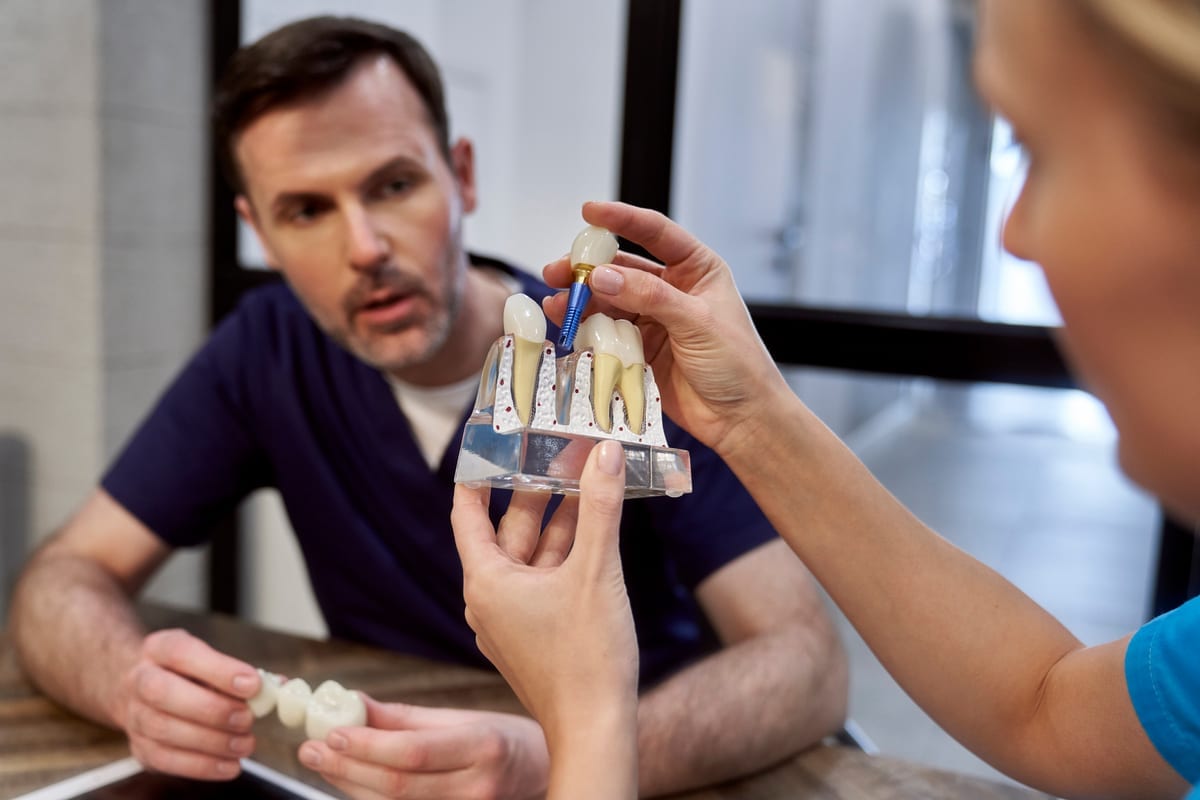
Once osseointegration is complete, the next phase begins. Dr. Bradley places a small connector piece called an abutment onto the implant post. The abutment acts as the anchor for your final custom crown. This appointment is straightforward and typically requires only local anesthesia.
Impressions or digital scans of your teeth are then taken. These images are sent to a dental lab where your permanent crown is crafted. The crown is custom-designed to match the shape, size, and color of your surrounding teeth. It’s built to look completely natural in your smile.
When your crown is ready, you return for the final placement appointment. Dr. Bradley checks the fit carefully and makes any minor adjustments needed. Once secured, the crown functions just like a natural tooth. You can eat, speak, and smile with complete confidence.
- The abutment connects the implant post to the visible crown
- Crowns are custom-crafted to blend seamlessly with your smile
- Final placement is quick and typically painless
- Implants can last decades with proper care and maintenance
How Dental Implants Connect to Your Overall Oral Health in Beaverton
Dental implants don’t just replace missing teeth — they support your overall oral health. Without a tooth root, the jawbone beneath an empty space begins to deteriorate over time. Implants stimulate the bone just like natural teeth do. This helps preserve your facial structure and long-term dental health.
Patients who choose implants often find they’re also interested in refreshing their entire smile. Cosmetic Dentistry services at Pacific Northwest Dental can complement your new implant beautifully. Teeth whitening, veneers, or contouring can help your smile look its absolute best. Dr. Bradley is happy to discuss a comprehensive smile plan during your consultation.
If you ever experience sudden pain or swelling around your implant site, don’t wait. Emergency Dentistry is available at Pacific Northwest Dental for situations that need prompt attention. Early intervention protects your implant investment and your overall health. Our Beaverton team takes urgent concerns seriously and will see you quickly.
Frequently Asked Questions
How long does the full dental implant process take?
The complete dental implant process in Beaverton typically takes four to nine months from consultation to final crown. Most of that time is the osseointegration phase, where the implant fuses with your jawbone. The actual surgical and placement appointments are much shorter. Your timeline depends on your individual healing and whether preparatory procedures like bone grafting are needed.
Is the dental implant procedure painful?
Most patients are pleasantly surprised by how manageable the discomfort is. Local anesthesia keeps you completely comfortable during the procedure itself. Mild soreness and swelling after surgery are normal and usually subside within a few days. Dr. Bradley provides clear aftercare guidance and can recommend appropriate pain relief options.
What if I don’t have enough bone for an implant?
Insufficient jawbone is common and doesn’t automatically disqualify you from getting implants. Dr. Bradley may recommend a bone graft to build up the area before implant placement. This adds time to the overall process but creates the strong foundation implants need to succeed. Your 3D scans during the consultation will determine whether grafting is necessary.
How do I care for my dental implant after it’s placed?
Caring for a dental implant is very similar to caring for a natural tooth. Brush twice daily, floss regularly, and attend your routine dental check-ups. Avoid chewing on very hard items like ice or hard candy that could stress the crown. With proper maintenance, dental implants can last many years or even a lifetime.
Can I get a dental implant if I’m nervous about dental procedures?
Absolutely. Pacific Northwest Dental offers sedation options specifically for patients who feel anxious about dental work. Dr. Bradley takes time to explain every step so you know exactly what’s happening. Many nervous patients have successfully completed implant treatment with the right support in place. Book Now to schedule your appointment with our team.